⚡ Charging Networks

EV Charging Networks
Across The United States

Compare major electric vehicle charging providers used for road trips, daily driving, fast charging, destination charging, and cross-country EV travel.

Tesla Supercharger Logo
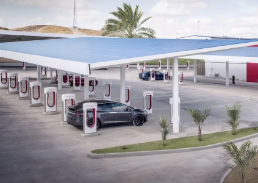
Tesla Supercharger Station

Tesla Supercharger

Best for fast highway charging

Tesla's Supercharger network is one of the most reliable and extensive EV fast charging systems in North America.

Typical Pricing / Plans

Estimated cost: commonly around $0.30–$0.60+ per kWh depending on location, time, demand, and vehicle access.

Plan: Non-Tesla EV drivers may use a Supercharging Membership, commonly listed around $12.99/month, to access lower Tesla-style rates.

Pricing varies by station and should be checked in the Tesla app before charging.

Pros

  • Excellent nationwide highway coverage.
  • Very reliable charging experience.
  • Simple plug-and-charge workflow.
  • Fast charging speeds at many locations.

Cons

  • Some locations remain Tesla-only.
  • Adapters may be required for CCS vehicles.
  • Popular stations may become crowded.
  • Cable length can be short for some EVs.

Electrify America Logo
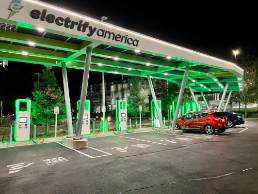
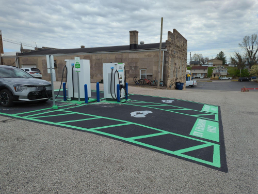
Electrify America Charging Station

Electrify America

Best for CCS fast charging

Electrify America operates one of the largest CCS-based fast charging networks in the United States.

Typical Pricing / Plans

Estimated cost: varies by charger and location, often in the public DC fast charging range.

Plan: Pass+ is a paid monthly plan that can save about 25% on charging.

Electrify America recommends checking the app or charger screen for current pricing, idle fees, and power level.

Pros

  • Strong interstate corridor coverage.
  • Supports high-speed charging.
  • Works with most CCS EVs.
  • Many locations near shopping areas.

Cons

  • Reliability can vary by station.
  • Some chargers may be offline.
  • Can be expensive without membership.
  • Older stations may charge slower.
IONNA Logo
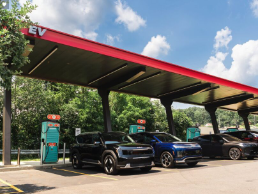
IONNA Charging Station

IONNA

Best for next-generation charging

IONNA is a new automaker-backed charging network focused on premium fast charging.

Typical Pricing / Plans

Estimated cost: pricing has been reported around $0.32–$0.39 per kWh, with promotional openings sometimes lower.

Plan: No broad public monthly plan is clearly listed yet, but some automaker partners may offer discounts.

IONNA is still expanding, so pricing and discounts may vary by partner, app, and location.

Pros

  • Backed by major automakers.
  • Modern charging station design.
  • Focused on long-distance travel.
  • Built for future EV expansion.

Cons

  • Still expanding nationwide.
  • Limited station footprint today.
  • Coverage varies by region.
  • Long-term reliability still developing.
ChargePoint Logo
ChargePoint EV Charger

ChargePoint

Best for destination and Level 2 charging

ChargePoint has one of the largest EV charging footprints in North America.

Typical Pricing / Plans

Estimated cost: varies widely because station owners set pricing; Level 2 and DC fast charging prices differ by site.

Plan: No universal ChargePoint monthly discount plan for all stations.

ChargePoint pricing is controlled by the station owner or roaming partner and should be checked in the app.

Pros

  • Huge nationwide charging footprint.
  • Great for overnight charging.
  • Easy-to-use mobile app.
  • Common at hotels and offices.

Cons

  • Many chargers are slower Level 2 units.
  • Speed and pricing vary widely.
  • Some stations are privately restricted.
  • Fast charging availability is limited.
EVGO Logo
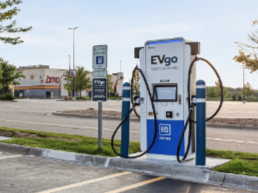
EVGO Charging Station

EVGO

Best for urban charging

EVGO is known for urban and retail-area fast charging.

Typical Pricing / Plans

Estimated cost: varies by location, time, and plan.

Plan: EVgo Plus is $6.99/month for up to 15% savings; EVgo PlusMax is $12.99/month for up to 30% savings. Pay As You Go has no monthly fee but may include a session fee.

Use the EVgo app for exact pricing at each charger.

Pros

  • Strong metro area coverage.
  • Good retail and shopping locations.
  • Fast charging support.
  • Good for drivers without home charging.

Cons

  • Less rural highway coverage.
  • Some stations are small or busy.
  • Pricing can vary considerably.
  • Availability depends heavily on region.
GM Energy Logo
GM Energy Charging Station

GM Energy

Best for GM EV ecosystem integration

GM Energy provides charging solutions for GM electric vehicles including home and public charging partnerships.

Typical Pricing / Plans

Estimated cost: depends on the partner network, such as IONNA, EVgo, Electrify America, or Tesla Supercharger access.

Plan: GM Energy does not appear to be a single flat-rate public charging network; eligible GM app users may see partner-network discounts such as IONNA savings.

Pricing depends on the network used through the GM charging ecosystem.

Pros

  • Integrated with GM EV ownership.
  • Supports home and public charging.
  • Growing charging partnerships.
  • Energy management ecosystem.

Cons

  • Relies heavily on partner networks.
  • Still growing infrastructure.
  • Some features limited to GM vehicles.
  • Not yet a standalone nationwide network.
Blink Charging Logo
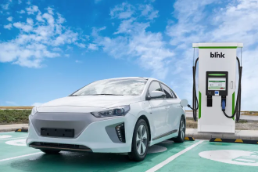
Blink Charging Station

Blink Charging

Best for public and commercial charging

Blink Charging operates public EV charging stations across the United States with a focus on retail, commercial, municipal, and parking-based charging locations.

Typical Pricing / Plans

Estimated cost: public charging varies by charger type, region, and station owner.

Plan: Blink Membership offers discounted rates at select public Blink stations, plus account benefits.

Blink-owned and host-owned stations may price differently.

Pros

  • Large network of public charging locations.
  • Good coverage in urban and commercial areas.
  • Mix of Level 2 and DC fast charging.
  • Often located near shopping and parking facilities.

Cons

  • Charging speeds vary significantly by location.
  • Some stations use older hardware.
  • Fast charger availability is inconsistent.
  • Reliability can vary between sites.
Francis Energy Logo
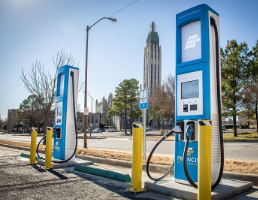
Francis Energy Charging Station

Francis Energy

Best for expanding regional fast charging

Francis Energy is building EV charging infrastructure with a focus on underserved and regional markets where fast charging options may be limited.

Typical Pricing / Plans

Estimated cost: many DC fast charging stations are listed around $0.39/minute plus a $1 session fee; Level 2 stations are often listed around $1.25/hour plus a $1 session fee.

Plan: No widely advertised monthly discount plan found.

Some regions may use per-kWh pricing, so check the Francis EV Charging app or PlugShare for location-specific pricing.

Pros

  • Helpful coverage in underserved travel corridors.
  • Focus on regional fast charging expansion.
  • Can fill gaps between larger national networks.
  • Useful for road trips through smaller markets.

Cons

  • Smaller network than national providers.
  • Coverage varies significantly by state.
  • Station amenities may vary by location.
  • May require app/account setup for best experience.
Red E Charge Logo
Red E Charge Station

Red E Charge

Best for regional charging partnerships

Red E Charge focuses on regional EV charging solutions, commercial charging deployments, and managed charging services.

Typical Pricing / Plans

Estimated cost: pricing information is not consistently published publicly and may vary by host site.

Plan: No widely advertised monthly discount plan found.

Use the provider app, PlugShare, or the station screen for current pricing.

Pros

  • Good fit for regional charging access.
  • Supports commercial and public charging sites.
  • Can help fill gaps outside major networks.
  • Useful for local and destination charging.

Cons

  • Smaller footprint than major national networks.
  • Less predictable for long-distance road trips.
  • Charging speed can vary by site.
  • Availability depends heavily on region.
Rivian Adventure Network Logo
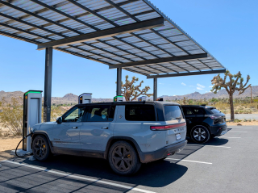
Rivian Adventure Network

Rivian Adventure Network

Best for outdoor adventure travel

Rivian Adventure Network focuses on fast charging near outdoor destinations, parks, and travel routes.

Typical Pricing / Plans

Estimated cost: varies by site; Rivian says pricing is shown in the Rivian app, vehicle display, or charger screen.

Plan: Rivian drivers may receive discounted rates at locations open to all EVs.

No universal monthly charging plan was found.

Pros

  • Great fit for scenic and outdoor road trips.
  • Modern hardware and clean station design.
  • Often located near adventure destinations.
  • Strong experience for Rivian drivers.

Cons

  • Smaller network than Tesla, ChargePoint, or EA.
  • Access may be limited depending on vehicle.
  • Not available in every travel corridor.
  • Best coverage is destination-specific.
EV Connect Logo
EV Connect Charging Station

EV Connect

Best for commercial charging networks

EV Connect provides EV charging management software and charging infrastructure for businesses, commercial properties, fleets, and public charging operators.

Typical Pricing / Plans

Estimated cost: public Level 2 charging is often around $0.20–$0.26/kWh, while DC fast charging can run around $0.35–$0.60/kWh depending on site.

Plan: No universal EV Connect driver monthly discount plan found; pricing depends on the site/operator.

EV Connect often supports charging infrastructure operated by businesses, fleets, and property owners.

Pros

  • Strong commercial charging management tools.
  • Useful for workplace, fleet, and public charging.
  • Supports a variety of charging hardware.
  • Good option for property-based charging access.

Cons

  • Less recognizable as a road-trip network.
  • Driver experience may vary by site owner.
  • Some stations may be restricted or private.
  • Fast charging availability depends on deployment.